
Why Commercial Carpet Is No Longer Just a Flooring Choice:
7 Shifts Reshaping B2B Flooring in 2026
7 Shifts Reshaping B2B Flooring in 2026
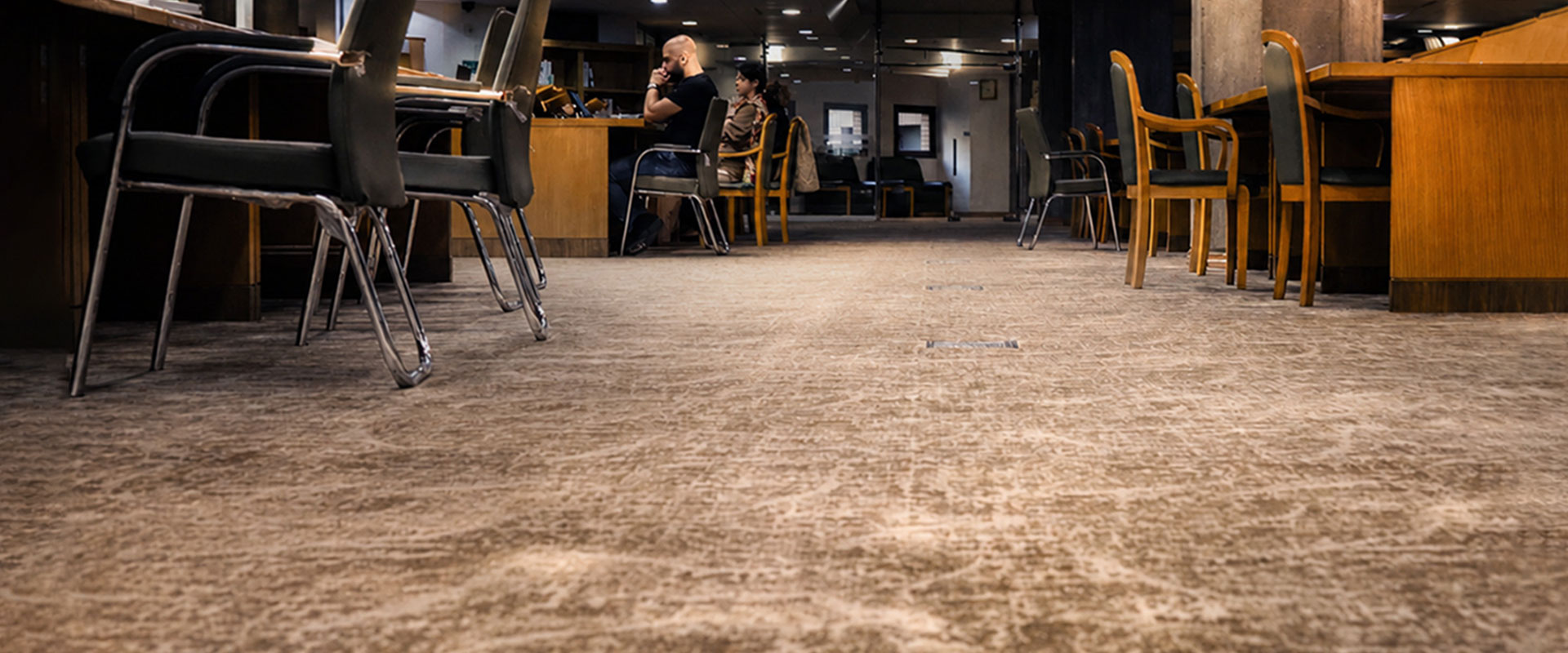
For decades, commercial carpet was largely evaluated through three familiar questions:
Does it look good? Is it durable? And what does it cost?
That model is changing.
Today, commercial flooring decisions are increasingly connected to acoustics, maintenance, lifecycle cost, sustainability, workplace experience, installation flexibility, and even supply-chain resilience. For architects, designers, contractors, procurement teams, distributors, and flooring professionals, this means that selecting a commercial carpet is no longer simply a product decision. It is increasingly a performance and lifecycle decision.
Here are seven shifts that are changing the way commercial flooring is being specified and purchased in 2026.
- Carpet Is Becoming Part of the Acoustic Strategy
One of the most interesting changes in commercial interiors is the growing importance of acoustics. Modern offices are often designed around open layouts, collaboration areas, shared workspaces, and flexible meeting zones. While these environments can improve interaction, they can also increase unwanted background noise. This is where soft flooring can play a role.
Carpet can contribute to a more acoustically comfortable environment by helping reduce sound reflection and impact noise compared with many hard flooring surfaces. This makes carpet particularly relevant in:
- Open-plan offices
- Meeting and collaboration areas
- Hotels
- Libraries
- Education facilities
- Cinemas
- Hospitality environments
The important shift is that carpet is no longer being considered only as a visual layer. It can also be part of the acoustic design of a space.
- Carpet Tiles Are Changing the Meaning of “Permanent Flooring”
Traditional flooring was often designed around the idea of permanence. install it once. Maintain it. Replace the entire floor when necessary.
Modular carpet tiles challenge this model. because individual modules can be removed and replaced, carpet tiles can provide greater flexibility during the operational life of a building. this is particularly valuable in commercial environments where closing an entire floor for maintenance is expensive or impractical.
A damaged area can potentially be addressed without replacing the entire installation. This creates an important distinction: The value of modular flooring is not only in installation. It is in what happens after installation. That makes carpet tile an increasingly interesting option for offices, hospitality, education, retail, and other spaces where flexibility matters.
- The Industry Is Moving from Price to Lifecycle Value
A low purchase price does not necessarily mean a low-cost flooring solution. For B2B buyers, the more useful question is:
What will this flooring cost over its entire service life?
Lifecycle thinking considers factors such as:
- Initial product cost
- Installation cost
- Maintenance requirements
- Cleaning frequency
- Replacement requirements
- Downtime during maintenance
- Product durability
- Availability of replacement materials
For example, a flooring system that costs slightly more initially may generate lower total costs if it requires less frequent replacement or allows damaged areas to be repaired without disrupting the entire installation. this is why professional flooring procurement is gradually moving from purchase price toward total lifecycle value.
- Sustainability Is Becoming More Measurable
“Sustainable” is no longer enough as a specification. the conversation is increasingly moving toward measurable information. depending on the project and market, specifiers may need to understand:
- Material composition
- Recycled content
- Product emissions
- Manufacturing processes
- Product lifecycle
- Environmental declarations
- End-of-life considerations
- Supply-chain transparency
This represents an important change in B2B flooring.
Sustainability is moving from a marketing statement toward a data and documentation issue. for manufacturers, this means that future competitiveness will depend not only on producing better products, but also on being able to explain and document their environmental performance.

- Design Is Moving Toward “Quiet Complexity”
Commercial carpet design is also evolving.
Instead of highly dominant patterns, many contemporary commercial interiors are moving toward more nuanced surfaces:
- Layered textures
- Subtle tonal variations
- Low-contrast patterns
- Organic structures
- Natural-inspired palettes
- Irregular geometric forms
The objective is not necessarily to make the floor the focal point. in many projects, the flooring is designed to support the architecture rather than compete with it.
This creates a new design principle: The most successful commercial carpet does not always attract attention. Sometimes, it creates atmosphere without demanding attention.
Recent 2026 observations from the commercial flooring sector similarly point toward restrained, low-saturation palettes and quieter visual approaches.
- Specification Is Becoming More Technical
Commercial flooring is increasingly being selected through a specification process rather than simply through a product catalogue. architects, contractors, procurement teams, and project consultants may need to evaluate:
- Fiber type
- Construction method
- Pile weight
- Pile height
- Total weight
- Backing system
- Dimensional stability
- Colorfastness
- Fire performance
- Acoustic characteristics
- Installation requirements
- Maintenance requirements
This means the future of commercial carpet belongs to products that can communicate their performance clearly. a beautiful sample may open the conversation.
Technical transparency helps close it.
- The Future Is Not “Carpet vs. Hard Flooring”
One of the most important changes may be the disappearance of the idea that a commercial project must choose one flooring category. modern interiors increasingly use different flooring solutions for different functions. carpet may be selected for:
- Workstations
- Meeting areas
- Hotel rooms
- Lounges
- Corridors
- Acoustic zones
While hard flooring may be more appropriate for:
- Entrances
- Wet areas
- High-moisture environments
- Service areas
- Certain high-traffic zones
This creates a more sophisticated approach: The question is no longer “Which flooring is best?”
It is: “Which flooring performs best for this specific environment?”
That distinction is fundamental to modern flooring specification.
What Does This Mean for B2B Flooring Professionals?
For manufacturers, distributors, architects, contractors, and procurement teams, these changes point toward a broader transformation.
The future of commercial flooring will increasingly be shaped by five dimensions:
Performance: How does the product behave under real-world conditions?
Experience: How does it influence acoustics, comfort, aesthetics, and the experience of the space?
Flexibility: How easily can the flooring adapt to changing layouts, maintenance requirements, and future renovations?
Transparency: Can the manufacturer provide reliable technical and environmental information?
Lifecycle Value: What is the real cost and performance of the flooring throughout its useful life?
These questions are more useful than simply asking:
“How much does it cost per square meter?”
The Bigger Shift: From Product to System. Perhaps the most important development in commercial flooring is that the industry is gradually moving away from thinking about carpet as an isolated product. a commercial carpet is part of a larger system that includes:
Material → Manufacturing → Design → Installation → Building Performance → Maintenance → Replacement → End of Life
Once flooring is viewed through this wider lifecycle, decisions become more strategic. a carpet is not simply something placed on a floor.
It can influence acoustics, visual identity, maintenance, flexibility, occupant experience, and the long-term economics of a building.
That is why the next generation of commercial flooring decisions will likely be less about choosing the “best carpet” and more about choosing the right flooring system for the right environment.
Final Thought
The commercial flooring industry is entering a period where design, technology, sustainability, and procurement are becoming increasingly interconnected. for B2B professionals, this creates an opportunity to look beyond traditional product specifications and ask better questions:
How will this flooring perform?
How will it be maintained?
How adaptable will it be?
What information supports its environmental claims?
And what value will it create over its entire lifecycle?
The answers to these questions may define the next generation of commercial flooring.
