
How to Remove Carpet Odors:
A Complete Guide to Pet, Musty, Smoke, and New Carpet Smells
A Complete Guide to Pet, Musty, Smoke, and New Carpet Smells
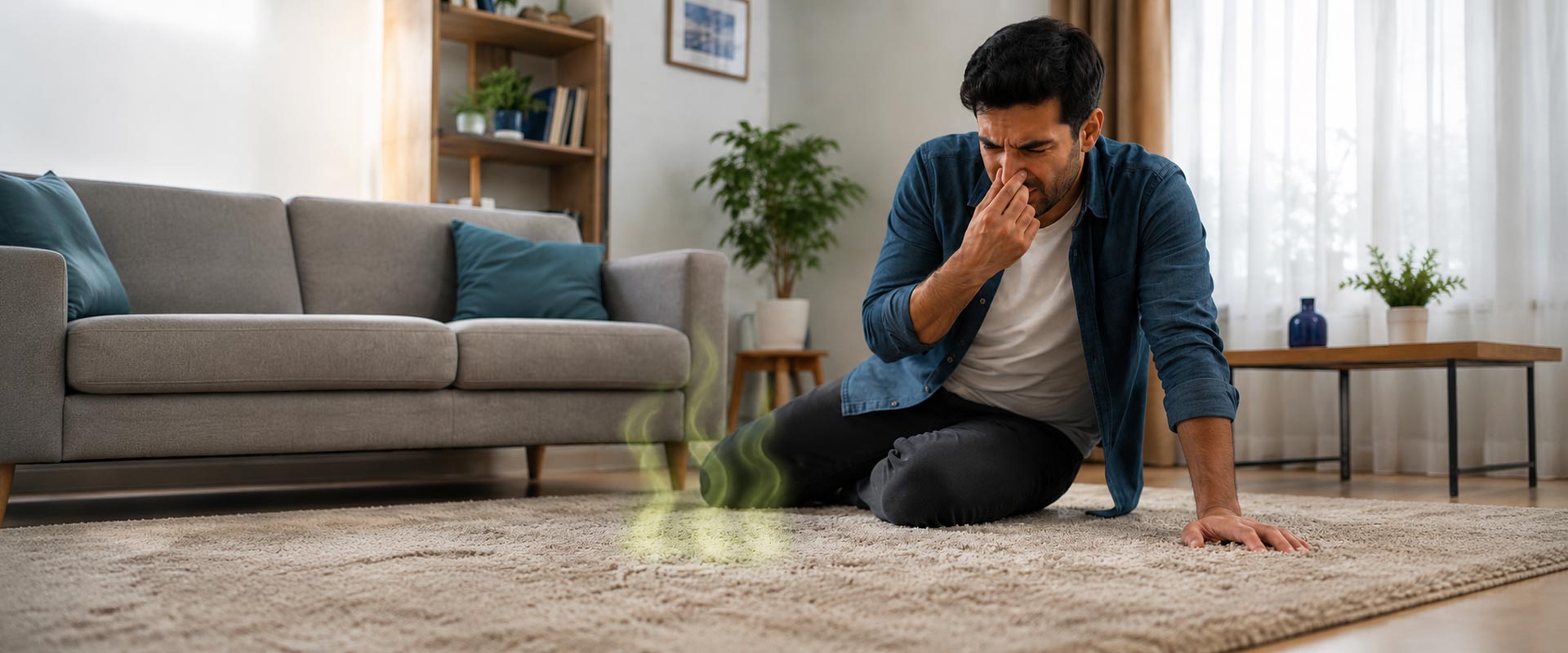
A fresh-looking carpet should smell fresh too. But because carpet covers a large surface area and contains thousands of closely packed fibers, it can hold dust, spills, moisture and other odor producing materials.
The important thing to remember is this:
An odor is a clue not the real problem.
Fragrance sprays may hide the smell temporarily, but lasting odor removal requires three things: finding the source, removing the residue and drying the carpet completely.
This guide explains how to identify common carpet odors and treat them safely without damaging the pile, backing or underlay.
Quick Carpet Odor Guide
Type of odor | Possible cause | First action |
Musty or earthy | Moisture, damp underlay or microbial growth | Find the moisture source and begin drying immediately |
Sharp “new” smell | Newly installed carpet, cushion or adhesive | Increase ventilation for 48–72 hours |
Ammonia-like smell | Pet urine, often below the carpet surface | Blot or extract, then use an approved pet-odor treatment |
Sour smell | Milk, food, beverages or organic spills | Remove the residue and treat the affected area promptly |
Smoke smell | Tobacco, cooking smoke or fire residue | Clean the carpet and other affected surfaces |
General stale smell | Dust, body oils, poor ventilation or delayed maintenance | Vacuum thoroughly and assess whether deep cleaning is required |
Before Applying Any Carpet Cleaner
Carpet construction and fiber type matter. A treatment suitable for polypropylene carpet may not be appropriate for wool, nylon, polyester or specialty backing systems.
Before using any product:
- Check the carpet manufacturer’s care instructions.
- Test the cleaner on a hidden area.
- Use only the recommended concentration.
- Never mix different cleaning chemicals.
- Do not use chlorine bleach unless specifically permitted.
- Avoid over wetting the carpet.
- Blot stains instead of scrubbing them.
- Keep children and pets away until the area is clean and completely dry.
More cleaning product does not necessarily produce a better result. Excess detergent can remain inside the pile, attract new soil and cause the carpet to become dirty again more quickly.
Step 1: Find the Source of the Smell
Before treating the entire room, determine whether the odor is coming from:
- The carpet surfaces
- A local spill or pet accident
- The carpet backing
- The underlay or cushion
- The subfloor
- A nearby wall, curtain, upholstered surface or HVAC system
If the smell becomes stronger during humid weather, contamination may have reached the backing or underlay. A musty odor that returns after cleaning may also indicate moisture below the visible surface.
Treating only the carpet pile will not solve an odor problem located underneath it.
Step 2: Remove Dry Soil Thoroughly
Dry soil, pet hair, skin particles and dust can hold odor-producing material. Vacuuming is therefore the first step in most odor-removal procedures.
Vacuum slowly and make several passes over high-traffic areas. Use edge and crevice attachments around walls, furniture and doorways.
The vacuum should also be suitable for the carpet construction. Aggressive rotating brushes may not be appropriate for certain loop-pile, high-pile or delicate carpets. Always follow the carpet and vacuum manufacturers’ instructions.
Empty the collection chamber or replace the bag before it becomes full, and maintain the vacuum filters according to the equipment manufacturer’s schedule.
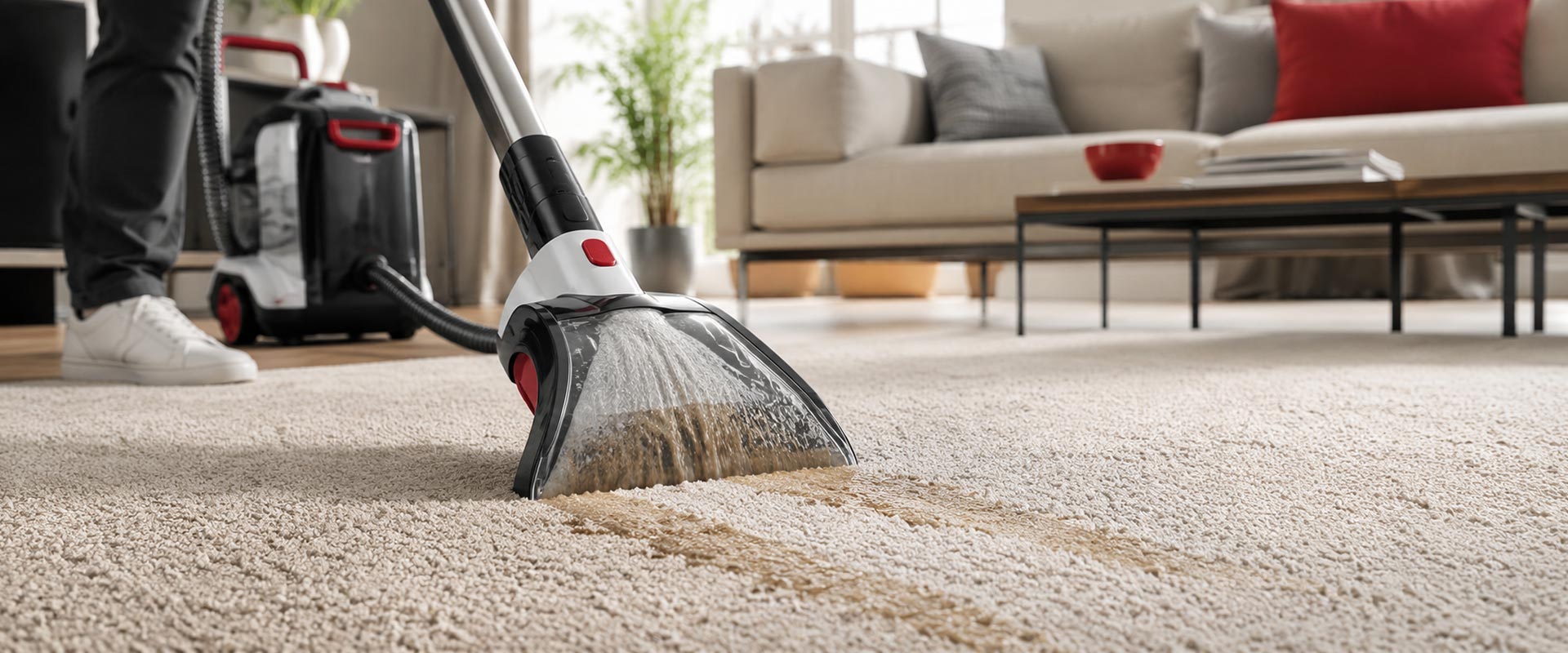
How to Remove Light, General Carpet Odors
For a carpet that smells stale but has no visible stains or moisture damage:
- Ventilate the room.
- Vacuum the carpet thoroughly.
- Inspect hidden areas and the space beneath furniture.
- Treat any identified spots with an approved carpet-cleaning product.
- Arrange professional deep cleaning if the odor remains.
An air purifier with an activated-carbon filter may reduce some airborne odors, but it cannot remove contamination from carpet fibers, underlay or subflooring. It should support source removal not replace it.
Does Baking Soda Remove Carpet Odors?
Plain baking soda may temporarily reduce some mild surface odors, but it will not remove pet urine from the underlay, correct a moisture problem or eliminate smoke contamination.
Fine powders can also remain inside dense carpet pile or enter some vacuum motors. If the carpet and vacuum manufacturers permit its use, apply it sparingly, keep the carpet dry and remove the powder completely.
Do not mix baking soda with essential oils, perfumes, cinnamon or other scented powders. These additions may stain the carpet, leave residue or create unnecessary risks for children and pets.
How to Remove Pet Urine Odor from Carpet
Pet urine should be treated as quickly as possible. If it penetrates the carpet backing, cushion or subfloor, the odor can return especially when indoor humidity rises.
For a fresh accident:
- Blot the area immediately with plain white paper towels or a clean white cloth.
- Apply pressure without rubbing.
- Rinse lightly with clean, cool water if permitted by the care instructions.
- Extract or blot as much moisture as possible.
- Apply a carpet-approved pet stain and odor remover according to its directions.
- Dry the area completely.
Enzyme based products can help break down organic residues, but they must reach the same depth as the urine. Use only products intended for carpet and follow the required application and dwell time.
Avoid steam or high heat on urine spots. The Carpet and Rug Institute warns that heat may set both the stain and odor. Its pet urine guidance recommends prompt blotting and an approved pet stain and odor treatment.
If the odor returns after treatment, the underlay or subfloor may also require professional cleaning, sealing or replacement.
How to Deal with Musty or Damp Carpet Smells
A musty smell is a moisture warning. Deodorizing the surface without fixing the water source will only hide the problem temporarily.
Check for:
- Plumbing or roof leaks
- Moisture beneath the carpet
- Condensation
- Previous flooding
- Wet carpet under furniture
- Incomplete drying after cleaning
- Damp carpet cushion or underlay
After a leak or spill, the carpet, backing and underlay should be dried as quickly as possible. The U.S. EPA recommends drying wet materials within 24–48 hours to reduce the likelihood of mold growth.
Use water-extraction equipment, fans and dehumidifiers where appropriate. Fix the source of the moisture before reinstalling or covering the affected area.
Do not treat visible mold with fragrances or household chemicals and assume that the problem has been solved. If you find visible growth, extensive water damage, contaminated floodwater or a persistent musty smell, contact a qualified remediation professional. Absorbent underlay or badly contaminated carpet may need to be replaced.
How to Reduce New-Carpet Smell
A newly installed flooring system may release a noticeable smell from the carpet, cushion, adhesive or other installation materials.
Ventilate the area with outdoor air during installation and, where possible, for 48–72 hours afterwards. Open windows, operate the ventilation system and use fans to move indoor air outside.
For commercial and hospitality projects, ask suppliers for relevant emissions documentation and specify suitable low-emission carpets, cushions and installation materials where required.
If a strong or objectionable smell continues, contact the carpet supplier or installer rather than masking it with fragrance.
How to Remove Smoke Odor from Carpet
Smoke residue does not remain only in the carpet. It can settle on walls, ceilings, curtains, furniture and inside ventilation systems.
Start by:
- Removing the source of the smoke
- Ventilating the room
- Vacuuming the carpet thoroughly
- Cleaning other affected surfaces
- Replacing or cleaning HVAC filters as recommended
- Arranging professional carpet cleaning when necessary
For heavy tobacco or fire-smoke contamination, professional odor remediation may be required. Carpet cleaning alone may not solve a whole-room smoke problem.
Never pour vinegar, dishwashing liquid or an unapproved household mixture into carpet-extraction equipment. Use only solutions permitted by the carpet and machine manufacturers.
How to Treat Food, Milk and Beverage Odors
Organic spills can become particularly unpleasant when they penetrate the backing or underlay.
For fresh spills:
- Remove solids carefully with a spoon.
- Blot liquid using a clean white cloth.
- Apply a suitable carpet spot remover to the cloth—not directly in excessive amounts.
- Work from the outside of the spot toward the center.
- Rinse lightly if required by the product instructions.
- Blot and dry the area completely.
Do not scrub. Scrubbing can distort the pile, spread the spill and push contamination deeper into the carpet.
If milk, food or another organic liquid has soaked through the carpet, surface treatment may not be enough.
Professional Carpet Cleaning
Vacuuming controls dry soil, but it cannot remove every substance embedded in the carpet.
The Carpet and Rug Institute recommends professional deep cleaning approximately every 12–18 months, subject to traffic levels, use conditions and the carpet manufacturer’s warranty requirements.
High-traffic commercial areas may require more frequent maintenance.
A professional should:
- Identify the carpet fiber and construction
- Select compatible cleaning chemistry
- Avoid excessive detergent residue
- Extract as much moisture as possible
- Promote fast, complete drying
- Inspect whether contamination has reached the underlay or subfloor
“Steam cleaning” is often used as a general term, but many professional systems actually use controlled hot-water extraction. The correct method depends on the carpet specification and manufacturer’s maintenance instructions.
Preventing Carpet Odors
Prevention is easier than treating a deeply embedded smell.
- Use effective entrance mats to reduce tracked-in soil.
- Vacuum at least weekly and more frequently in high-traffic areas.
- Clean spills and pet accidents immediately.
- Keep carpet away from persistent water sources.
- Maintain good ventilation.
- Use a dehumidifier where indoor humidity remains high.
- Keep indoor relative humidity below 60% where practical.
- Do not place furniture over damp carpet.
- Maintain HVAC and vacuum filters according to manufacturer instructions.
- Schedule periodic professional cleaning.
- Keep product care instructions and warranty documents available.
Carpet Care for Hotels, Offices and Commercial Spaces
Commercial carpet needs a planned maintenance program rather than occasional emergency cleaning.
An effective program should include:
- Exterior and interior entrance matting
- Daily attention to entrances and heavy-traffic zones
- Scheduled vacuuming based on traffic
- A documented spill-response procedure
- Approved spot-cleaning products
- Periodic interim cleaning
- Planned professional deep cleaning
- Fast investigation of leaks and moisture
This approach protects appearance, controls odor and helps extend the carpet’s service life.
When Should Carpet or Underlay Be Replaced?
Professional inspection may be necessary when:
- Visible mold is present
- The carpet was exposed to contaminated floodwater
- Odor repeatedly returns after cleaning
- Pet urine has reached the subfloor
- The backing has separated or deteriorated
- Underlay remains wet or contaminated
- The carpet cannot be cleaned and dried safely
Sometimes only the affected underlay requires replacement. In more serious cases, the carpet and subfloor may also need treatment.
Frequently Asked Questions
Why does my carpet smell worse after cleaning?
The most common causes are over wetting, incomplete extraction, detergent residue or slow drying. Increase ventilation and air movement. If the carpet remains damp or musty, contact a professional.
Can an air purifier remove carpet odor?
An activated-carbon filter may reduce airborne odor molecules, but it cannot remove the source from carpet, underlay or subflooring.
Can baking soda remove pet urine odor?
It may reduce a mild surface smell temporarily, but it cannot reliably remove urine that has penetrated the backing or underlay. Use a carpet-approved pet stain and odor treatment.
How long should new-carpet smell last?
The duration varies according to the carpet system, installation materials, room size and ventilation. Ventilate strongly for the first 48–72 hours and contact the supplier if an objectionable smell persists.
Should I use steam on pet urine?
Avoid direct steam or high heat on urine spots because heat may set the stain and odor. Use cool-water extraction and an approved treatment instead.
A Fresh Carpet Begins with Correct Care
Carpet odor is rarely solved by adding a stronger fragrance. The lasting solution is to identify the source, remove the contamination and dry every affected layer completely.
With suitable cleaning products, prompt action and a consistent maintenance program, carpet can remain fresh, comfortable and attractive for years.
Explore Zarif Carpets collections or contact our team for product specifications, installation guidance and maintenance recommendations for residential, hospitality and commercial projects.
