Decoding the Future: A Look at the Carpet and Flooring Market in Iran and Worldwide
A Bright Trajectory: Global Carpet and Flooring Market Forecast to 2028
The world’s flooring and carpeting market is on an upward curve. Fueled by massive construction projects, developing infrastructure, and a rising consumer demand for sustainable, premium products, the industry is undergoing significant transformation. Growing environmental consciousness and changing consumer preferences are reshaping the market landscape. Leading players are driving this growth through constant innovation. The future outlook is exceptionally bright. This report delves into the current market conditions and presents a comprehensive forecast for the industry’s continued expansion.
Market Size and Future Outlook for the Flooring and Carpeting Industry in the World, the Middle East, and Iran.
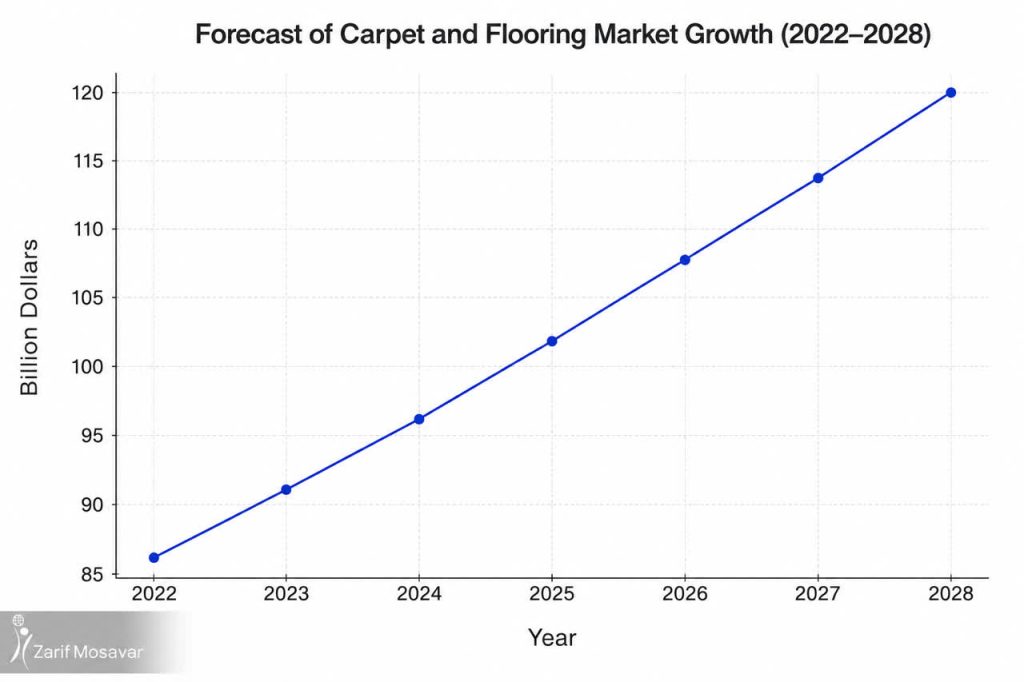
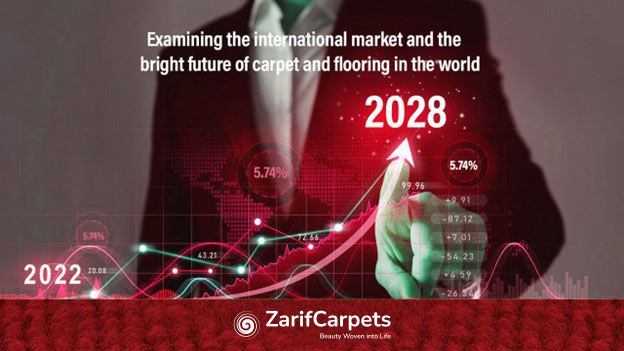
Varied statistics highlight the significant growth trajectory of the global flooring and carpeting market. According to Arizton, the worldwide market size for flooring and carpeting reached approximately $86.02 billion in 2022, and is projected to exceed $120 billion by 2028. This represents a compound annual growth rate (CAGR) of 5.74%. Furthermore, in the Middle East region, Sonia Vidal Castellano, Director at Dumotex, reported that the flooring industry market share was valued at approximately $8.6 billion in 2022, with expectations that this figure will grow to about $14.55 billion by 2030. For Iran, Statista data indicates that the market size for carpets, hand-woven rugs, industrial textiles, and flooring reached approximately $195 million in 2022, and is expected to reach around $250 million by 2028. In conclusion, these figures strongly motivate manufacturers in this sector to enhance their market share through strategic marketing and sales planning.
Detailed Market Report
The market scope can be analyzed through multiple critical axes:
1. By Application/Use-Case:
- Residential: Defined by comfort, aesthetics, and durability for home use.
- Commercial/Retail: Requires high durability, easy maintenance, and visual appeal for high-traffic areas.
- Institutional: Demands specialized resilience, safety compliance (e.g., anti-slip), and hygiene standards (e.g., hospitals and schools).
2. By Geographical Market:
- Europe: This region boasts established, stable markets with a strong emphasis on quality, sustainability, and historical aesthetic integration.
- Asia: Characterized by rapid growth, driven by urbanization and rising middle classes. China and India represent key high-growth hubs.
- Middle East & Africa: Growth is fueled by large-scale infrastructure projects and new urban developments.
- North America: A mature and stable market with diverse demands ranging from luxury residential to large commercial complexes.
- South America: Despite facing economic headwinds, the market exhibits resilience and strong growth potential, primarily driven by large-scale residential construction and burgeoning urbanization projects across key metropolitan areas.
- Oceania: Despite a relatively small population base, the robust tourism sector and ongoing infrastructure development are primary catalysts for market growth and expansion.
3. By Material Composition:
Materials encompass a diverse blend of sources, ranging from traditional natural resources such as wood and stone, to advanced synthetic materials including durable nylon and PVC.4. By End-User Applications:
The end-user base is highly diversified, spanning multiple sectors:- Residential: Private dwellings and housing complexes.
- Commercial: Office spaces, retail centers, and hospitality venues.
- Industrial: Specialized industrial applications and commercial infrastructure.
Key Players in the Flooring and Textile Market :
The global market for flooring and textiles is driven by several key players, each specializing in different segments from luxury residential design to large-scale commercial construction. The following companies represent significant forces in the industry: The British company Brintons is one of the leading manufacturers of high-quality woven carpets, both handmade and machine-made, serving both commercial and residential markets. The company’s reputation is built on design innovation, product excellence, technical expertise, and customer focus. Brintons operates in all major global markets and provides unique carpet solutions to its customers. The Egyptian company Oriental Weavers is one of the most recognized brands in today’s machine-made carpet and rug industry. With a clear and simple vision, the company has become a leading global exporter, supplying products to more than 130 countries. Oriental Weavers has been repeatedly recognized by the industry for its leadership in service, innovation, and quality. The Belgian company Beaulieu is one of the leading players in the European flooring industry, active in textile floor coverings, vinyl, laminate, and carpets. Thanks to its diverse product portfolio, the company holds a significant share of the market. Beaulieu employs more than 4,900 people in 19 countries across Eurasia, the Americas, and Oceania, and serves customers in 152 countries. In 2022, Beaulieu reported sales of €2.43 billion. The American company Shaw Industries is one of the world’s largest manufacturers of carpets, rugs, hard flooring, and laminate flooring, holding a significant share of the North American market. The Turkish company Merinos is one of the leading manufacturers of machine-made carpets and rugs in Turkey and exports its products to many countries. The success story of Merinos began in 1970, when Mehmet Erdemoğlu and his family started with only two kilim weaving looms. Today, Merinos is recognized as a global leader in the carpet industry, as well as in home textiles and yarn production. It is ranked among Turkey’s top 500 industrial companies and exports to 78 countries across five continents. The Chinese company Dongsheng was founded in 1998 and is currently one of the largest manufacturers of machine-made and handmade carpets in China, with a significant share of both domestic and international markets. The group produces 23 million square meters of carpet annually and has ranked first among its peers in production volume for 10 consecutive years. Dongsheng is recognized as one of China’s major carpet manufacturers with a strong presence in both local and global markets. The Turkish company Dinarsu is one of the leading companies in the Turkish market, operating in the production of machine-made carpets and carpets. The company is recognized as a reputable brand in the flooring industry and, thanks to the diversity and quality of its products, has gained a significant share of both domestic and international markets. With a focus on innovation and customer satisfaction, Dinarsu continues to develop and expand its activities. 8. Haima Carpet The Chinese company Haima Carpet, founded in 1958, is one of the important manufacturers of machine-made carpets in China and holds a significant share of both the domestic and export markets. The company produces 10 million square meters of various types of carpets annually, which are sold in more than 20 countries and regions, including Europe, the United States, the United Kingdom, Japan, Southeast Asia, Hong Kong, Taiwan, and Macau. 9. Jiangsu Kaili Carpet The Chinese company Jiangsu Kaili Carpet is one of the major manufacturers of machine-made carpets in China, holding a significant share of both domestic and international markets. Kaili has obtained numerous certifications in various fields, including quality and environmental standards. The Belgian company Balta is one of the largest manufacturers of carpets, rugs, textile floor coverings, and laminate flooring in Europe, with a significant share of the global market. Balta is also known for its expertise in producing natural wool carpets. Through its flexible and customer-oriented service approach, the company has become recognized as one of the pioneers in the European market for various types of tufted and woven carpets. The American company Dixie Group is recognized as one of the fast-growing companies in the U.S. textile industry. Dixie is a leading producer of luxury carpets and textile floor coverings for a wide range of markets, from construction, residential spaces, and restaurants to hospitals, hotels, commercial buildings, luxury vehicles such as recreational buses, and more. The American company Mohawk is one of the world’s largest manufacturers of carpets, rugs, hard flooring, and laminate flooring, with a significant share of the global market. With more than a century of manufacturing experience, Mohawk has emphasized quality in every product it produces since introducing its first carpets in 1878. The company is strongly committed to investing in environmentally responsible practices, from developing products made with renewable resources to maintaining optimized and efficient facilities and delivery systems. The American company Interface is one of the market leaders in carpet tiles and modular flooring, with a significant share of the global commercial and office flooring market. From research laboratories to production lines, Interface is always seeking to design better solutions. The German company Infloor, with more than 70 years of experience in the carpet industry, produces products such as woven carpets and textile floor coverings. Infloor holds a significant share of the European woven carpet and textile flooring market. The company’s products are recognized for their quality. The French company Tarkett is one of the global leaders in flooring, with a presence in more than 100 countries. It offers a wide range of flooring products, including vinyl rolls, luxury vinyl tiles, mineral tiles, linoleum, carpets, wood flooring, laminate flooring, and more. 16. Shanhua Carpet The Chinese company Shanhua Carpet is one of the largest carpet manufacturers in China. With a significant share of both domestic and international markets, it is known for producing machine-made carpets and luxury handmade carpets. The company has established production units in more than 136 cities around the world, widely supplying its products to global markets. The entire process, from design, yarn winding, dyeing, and production, is carried out in the company’s own factories. With the skilled hands of more than 1,296 production workers, Shanhua produces a wide range of colors and textures that enhance commercial and residential spaces around the world. The Chinese company Zhemei Carpets was founded in 1972 and is currently one of the prominent carpet manufacturers in China, recognized for its significant share in the domestic market as well as exports to international markets. Zhemei initially focused on integrating traditional regional cultures with modern designs in carpet patterns. Today, the company seeks to combine modernist ideas, regional cultures, and new technologies to produce high-quality products with strong artistic design value. With more than 5,000 skilled workers, the company has the capacity to produce 100 million square meters of carpet annually and can deliver urgent orders within seven days. The Chinese company HUADE Group was founded in 1986 and, with advanced equipment from Germany, the United Kingdom, and Belgium, along with more than 5,000 workers, is capable of producing 100 million square meters of machine-made carpets annually. The American company Milliken is one of the largest companies active in the production of carpets, rugs, hard flooring, and laminate flooring, with a significant share of both the North American and global markets. By focusing on designing beautiful spaces that inspire innovation, the company contributes to the advancement of well-being and global connectivity.Carpet Market Report Summary
The global carpet market is growing due to the expansion of construction activities, increasing residential and commercial demand, and infrastructure development. Europe and North America are among the largest carpet markets in the world, while markets in Asia and the Middle East are growing rapidly. The key market players include large and well-known companies that continuously improve their products to meet the diverse needs of consumers.Carpet, Flooring, and Rug Market Analysis
During the period from 2018 to 2022, the carpet and flooring market experienced significant growth due to the construction boom and rising household incomes. In particular, rapid economic growth in the Asia-Pacific region led to increased demand for modern flooring solutions. It is projected that during the period from 2023 to 2028, the global carpet and flooring market will grow at a compound annual growth rate of more than 5%. Factors such as increasing consumer awareness of environmental issues are also expected to drive greater demand for sustainable and eco-friendly products. In addition, the rise in renovation projects, development of new infrastructure, growing demand for durable and high-quality flooring, technological innovations, increased investment, and the development of new products are among the main reasons for this growth.Trend and Driver Analysis
Key trends in the flooring and carpet market include the following: Increasing demand for sustainable products: Consumers are increasingly seeking environmentally friendly products. Innovation in design and materials: Manufacturers are continuously introducing new products with innovative designs and more durable materials. Growth of online markets: Online sales of carpets and flooring are increasing due to convenience and the ability to compare prices and products.Future Outlook
Carpet and Flooring Market Size and Growth
The global carpet and flooring market is expected to grow at a compound annual growth rate of 5–6% through 2033. The expansion of construction activities, infrastructure development, and growing demand for high-quality and sustainable products are among the main drivers of this growth. The future of the global carpet and flooring market appears promising. Considering current trends and continuous innovation in production and design, the market is expected to continue growing. The development of new markets and increasing consumer awareness of the benefits of high-quality and sustainable products will also support further market growth.